
Choosing A Church Website Provider
If you have a dime, there are dozens, probably thousands of web hosting companies that would love to sell you on " easy" and " powerful" solutions for your church website.
Just Google "website hosting for churches" and you'll be rewarded with a wide array of options.
Any one of these choices could be a great fit or a bust.
Whenever there are lots of options, there are also lots of bad decisions just waiting to happen.
In order to minimize the chance of failure and set your church up for a heavenly hosting experience, there are a few things you need to know.
Cheaper is not always better.
I once had a church client who purchased their church website hosting from a company called hostfor2bucks.com.
Why was anyone surprised when that arrangement went south?
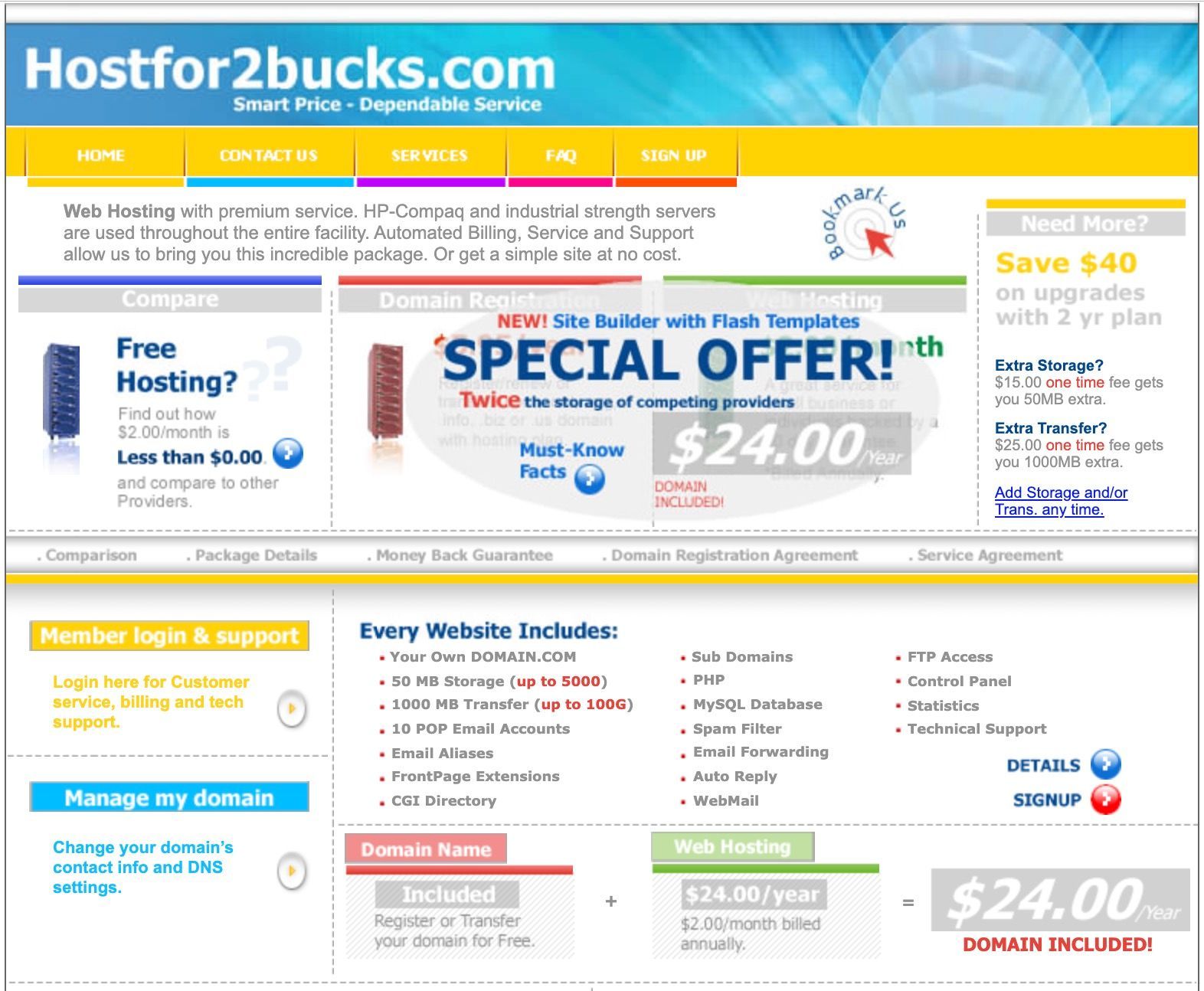
Don't choose the cheapest hosting option. In the long run, it's simply not worth the cost.
Choose a host that offers a generous set of resources at a mid-range price, say $20-$50 per month.
Read the reviews, and understand what you're getting before you commit.
There are 3 basic routes to go when choosing a solution for your church website.
Let's look at each option and examine the pros & cons.
Traditional Hosting
This classic option goes as follows: You rent server space bandwidth from a hosting company. You upload your website files and resources to the server and point your domain to it. The main benefits to this option are cost & flexibility. It's pretty inexpensive.
PROS:
COST: Although website hosting is generally quite cheap, remember that cheaper is not always better.
FLEXIBILITY: With traditional hosting, you can use any website platform or CMS (Content Management System) you want to, whether it is WordPress, Joomla, HTML, or some other structure, the door is wide open. However, with great flexibility comes great responsibility too, and that sets the stage for the biggest con :
CONS:
RESPONSIBILITY: In the traditional hosting environment, you or someone you designate is responsible for every aspect of the actual website. If something breaks in the code, you've got to fix it. Updates needed? that's on you too. If you're not comfortable with this, it may be best to go a different route.
DIY Builders
Over the last few years, there have been some amazing companies that have emerged to offer a nice fusion of web hosting and web builder platform.
These companies not only provide the most hosting, they also provide a simple toolset that allows even a novice to build a pretty nice looking website.
Companies such as Wix, Squarespace, and Duda all have solid options at reasonable prices.
PROS:
LESS RESPONSIBILITY: In the DIY Builder environment the responsibility for the platform codebase hosting rests on the company. If you have a problem with the tool set, they will fix it for you, or support you through it.
CONS:
FLEXIBILITY: With a DIY Builder, you are confined to the limits of the builder. If you need your church website to achieve a more complicated goal, you may find it difficult with this option.
Web Agency
Many churches find that it is easier and more cost effective to hire a website agency to handle every aspect of their church website. In this scenario, they contract with the agency to build and maintain the website, thus completely offloading the management and a church rep communicates with the agency who fulfills the requests as they come in.
PROS:
LITTLE RESPONSIBILITY: The agency handles nearly all of the massive responsibility. This makes it easy for the church to focus on other services and ministries that are important to them.
CONS:
COST: This option is definitely the most costly. It can cost thousands to have an agency build a site and there can be hefty monthly retainer fees to have them manage things for you.
While these 3 options are the most common, you may find that your church can benefit from a hybrid solution.
For instance, there are church website companies that will provide the expertise and oversight of a web agency while giving you that cost and simplicity of a DIY Builder.
Your best plan is to do your research, stick to your budget, and find a solution that will work long term for your church.
